

click below to login to your secure account
By
Tom Kozlik
Head of Public Policy and Municipal Strategy
Hilltop Securities Inc.
Rochelle Powell
Head of Higher Education & Non-Profit Group
Hilltop Securities Inc.
On June 8, Rochelle Powell, Head of HilltopSecurities’ Higher Education and Nonprofit Group, hosted a discussion with Jonathan Koppell, President of Montclair State University, and Dannel Malloy, Chancellor of the University of Maine System and former Governor of Connecticut. Tom Kozlik moderated the conversation. The topics we discussed have been at the top of my mind for some time because higher education is being pushed to answer a question many institutions still seem reluctant to face. How can colleges and universities prepare students for a labor market that may be changing faster than the institutions themselves?
Students and families are investing in college while the value of entry-level work is under pressure. Employers increasingly expect some degree of Artificial Intelligence (AI) familiarity. Students are being told this technology will reshape their careers before many of them have even stepped into an office. Gallup found this spring that Gen Z had become less positive about AI even as use remained steady. Nearly half of Gen Z respondents said the risks of AI in the workforce outweigh the benefits, according to the same Gallup poll.
Warnings have become harder to ignore. Anthropic CEO Dario Amodei has cautioned that AI could erase half of entry-level white-collar jobs within five years. Senator Mark Warner has called the issue a “hair on fire” moment and suggested recent college graduate unemployment could rise as high as 30% in the next two years. Whatever one thinks of those precise numbers, the broader concern is serious. Students and parents hear these warnings from leaders across different sectors while watching higher education often struggle to offer a clear plan.
A recent commencement address at the University of Arizona captured the tension. Nearly 20 years after Steve Jobs famously told Stanford graduates to “Stay hungry. Stay foolish,” Eric Schmidt, former CEO of Google, was booed when he turned to AI’s effect on jobs. The contrast is telling. Jobs framed uncertainty as a personal challenge, something graduates could use as their own motivation. The student reaction to Schmidt reflected a very different mood. Many students now see technological disruption arriving as something imposed on them, not as an opportunity they can choose.
There is still time for higher education to respond, and our discussion illustrated that it is responding. The labor market is changing at the margins, but there is not yet widespread AI-driven displacement across most sectors. A U.S. Federal Reserve report concluded that the slowdown in national job postings after the pandemic recovery does not appear to be driven, even modestly, by AI. Anthropic’s report on the labor market impact of AI similarly found no systematic increase in unemployment for highly exposed workers since late 2022, though Anthropic did find evidence that hiring of younger workers has slowed. And despite the warnings from Amodei and Warner, unemployment and underemployment among recent college graduates and young workers have not yet turned sharply negative, according to the Federal Reserve Bank of New York.
What the data suggests, at least so far, is that the jobs disruption is not quite here yet, despite the warnings, even as serious as those warnings might be.
But, the potential for changes in labor market skills are becoming more clear. The National Association of Colleges and Employers (NACE) recently found that demand for AI skills in entry-level jobs has nearly tripled since fall 2025. PwC’s Two futures for jobs in an AI era argues AI is creating a two-track labor market in which skills like judgment and leadership are becoming more critical and more rewarded. These are among the reasons why higher education still matters so much in this moment. Some may think that it is behind the pace of AI change, but it remains one of the few institutions capable of helping students adapt and develop the necessary skills.
1. Tasks and Expectations at Work Evolve Before Jobs Disappear
Both leaders pushed back on simple “jobs apocalypse” language. The better way to understand this moment is that many careers will still exist, but the work inside them may change quickly. Students who are not fluent in AI tools will be at a real disadvantage.
2. AI Literacy Cannot Be Optional
This was the clearest institutional lesson. Colleges and universities cannot send students into the world in 2026 without helping them understand what AI is, how it works, where it fails, and how it should be used. The University of Maine System’s investment in access, training, and adoption for employees and students stood out as a concrete example.
3. Student Anxiety is Shaping the Environment
Student sentiment is mixed, but it currently leans more toward concern than excitement. Students are seeing AI-powered resume screening, uncertainty around jobs, uneven rules, weak content, and confusion about what and who to trust. This helps explain why the American student posture still looks more defensive than optimistic.
4. Governance May Matter More Than the Tool Itself
An important issue around AI use and adoption is not simply what happens in the classroom or the labor market. The deeper concern could be governance, power, institutional dependence, and the degree to which control is concentrating in a small number of private firms.
5. Human Skills are Likely to Rise in Importance and Value
One of the most important ideas from the discussion was that AI may ultimately increase the value of judgment, ethics, communication, and discussion. If AI models or agents absorb more of the repetitive and rote work, then interpretation, conceptual understanding, and the ability to engage difficult questions may or likely will matter more, not less.
What came through in our discussion is that higher education is not standing still. It is beginning to recognize that AI is no longer a distraction. Colleges and universities have a real opportunity to shape how this technology enters public life through education. Institutions that build practical literacy, define responsible use, and connect AI to stronger student outcomes will be better positioned to show their relevance and prepare students for the new demands of today’s workplace.
That is part of why Demis Hassabis, the CEO of Google DeepMind, and his recent message to the humanities matter. When he said, “It is now your time,” he was pointing to the economic, ethical, and philosophical questions that AI is forcing into the open. Those are questions higher education is built to take on seriously.
Higher education may be under pressure, but it is also one of the few institutions still in position to lead. The discussion during the HilltopSecurities Webinar – In the Era of AI: What is Top of Mind for Two Higher Education Leaders illustrated there are leaders in the sector paving the way.
Readers may view all of the HilltopSecurities Municipal Commentary here.
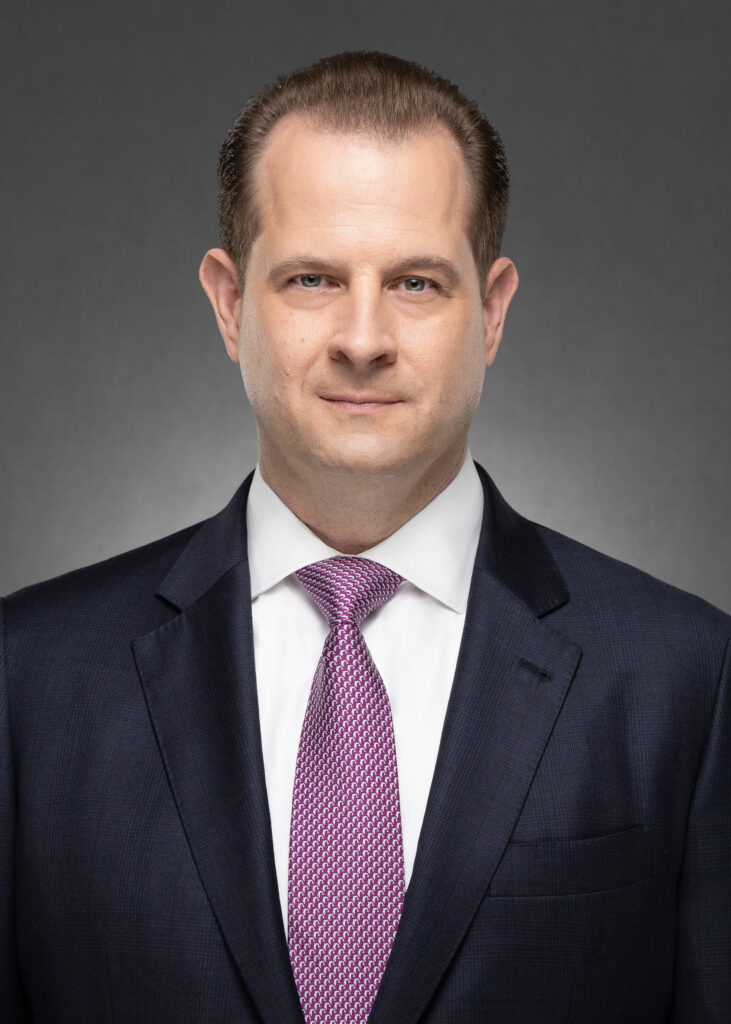 As Head of Public Policy and Municipal Strategy, Tom Kozlik advises HilltopSecurities’ businesses and clients on strategies related to U.S. public policy, public finance, and infrastructure. He publishes regular commentary that provides insight into current trends affecting these themes across a variety of sectors and geographic regions. Kozlik is frequently featured in print, digital, and broadcast news segments and regularly offers his expertise as a keynote speaker and panelist at industry conferences and events across the country. He can be reached at 214.859.9439 or tom.kozlik@hilltopsecurities.com.
The paper/commentary was prepared by HilltopSecurities (HTS). It is intended for informational purposes only and does not constitute legal or investment advice, nor is it an offer or a solicitation of an offer to buy or sell any investment or other specific product. Information provided in this paper was obtained from sources that are believed to be reliable; however, it is not guaranteed to be correct, complete, or current, and is not intended to imply or establish standards of care applicable to any attorney or advisor in any particular circumstances. The statements within constitute the views of HTS Public Finance as of the date of the document and may differ from the views of other divisions/departments of Hilltop Securities Inc. In addition, the views are subject to change without notice. This paper represents historical information only and is not an indication of future performance. This material has not been prepared in accordance with the guidelines or requirements to promote investment research, it is not a research report and is not intended as such. Sources available upon request.
Hilltop Securities Inc. is a registered broker-dealer, registered investment adviser and municipal advisor firm that does not provide tax or legal advice. HTS is a wholly owned subsidiary of Hilltop Holdings, Inc. (NYSE: HTH) located at 717 N. Harwood St., Suite 3400, Dallas, Texas 75201, (214) 859-1800, 833-4HILLTOP.