

click below to login to your secure account
By Tom Kozlik
Head of Public Policy and Municipal Strategy
Hilltop Securities Inc.
We have been signal hunting for weeks, and the strongest evidence on the demand side showed up in institutional flows over the month. A somewhat expected development, and the major municipal market headline for January of 2026 was the $7 billion that flowed into municipal mutual funds. About $2 billion flowed into municipal funds alone last week per Lipper data. Heavy flows met relatively light supply for much of January. Very strong demand is expected again in February, but light primary market issuance is expected at least in the first full week of the second month of 2026.
Last week the Federal Reserve announced what most expected, that their target rate was going to stay steady at the range of 3.50-3.75%. Municipal yields did not change substantially during the week. Only select maturities slightly fell, others did not budge. An important development in last week’s statement was that the assessment of economic conditions improved. Hilltop’s Scott McInytre, Greg Warner and Matt Harris indicated, “The committee upgraded their economic outlook, moving from activity expanding at a moderate pace to indicators showing activity has been expanding at a solid pace, while still underscoring attentiveness to risks on both sides of the dual mandate.” This means the target rate might not be adjusted lower as quickly this year as some thought, and generationally attractive municipal yields may be available longer than some expected.
Most participants and observers of public finance understand the job of U.S. Federal Reserve Chair is not just another Washington D.C. title. It can often be considered an important steering wheel of the U.S economy and U.S. infrastructure development. Sometimes the role can even be considered a safety or seat belt. And occasionally, just occasionally, it is the only hand on the guardrail when the highways and backstreets ice over.
In recent decades we have seen how much weight that role can carry. Bob Woodward dubbed Alan Greenspan “Maestro,” in his book published in 2000. Ben Bernanke became Time magazine’s Person of the Year during the financial crisis. Janet Yellen made history as the first woman to lead the Fed, and she did it while the country was still trying to put the Great Recession behind it. Jerome Powell’s legacy is still being written, but he led through the COVID-19 shock, the inflation surge that followed, and one of the fastest rate-hiking cycles in modern memory.
A transition to a new Fed Chair regime, as expected, is now in the works.
On Friday, Jan. 30, 2026, President Trump nominated Kevin Warsh to serve as U.S. Fed Chair, according to the White House announcement. Warsh is a former Federal Reserve governor (2006–2011) whose tenure overlapped with the 2008 crisis. He has also worked on Wall Street and served in the federal government. In other words, he has already operated and managed in the rooms where markets and monetary policy come together.
Markets are still sorting out what kind of chair he might be. The early read from Wall Street is clear as described in the Wall Street Journal’s article, Wall Street Can’t Decide whether Kevin Warsh Will Be Friend or Foe. Some investors see a pragmatist who will protect the Fed’s independence, which matters because credibility is key. Others focus on his long-running view that the Fed’s balance sheet should be smaller. However, the WSJ Editorial Board deemed Warsh not only as “The Right Choice” in “Kevin Warsh Is the Right Choice for the Fed,” but they also described him as “President Trump’s best second term appointment.”
State and local governments borrow in the municipal bond market to build infrastructure. These projects do not pause just because monetary policy turns. If a new chair pushes for faster rate cuts and a smaller Fed balance sheet, the direction of short-term rates could drop while long-term rates stay stubborn. That is one reason the “friend or foe” debate is not academic for public finance. It goes straight to the cost of new money and refunding issuance for infrastructure.
One more point that matters for public finance and the U.S. municipal bond market’s financing costs: Federal Reserve independence. We (Scott McInytre and I) discussed this in our podcast, “The Importance of Federal Reserve Independence — What Happens Before May?” If markets and investors believe the Fed is taking orders, they could demand a higher premium. That can bleed into municipal interest rates, even for highly rated public entities.
In retrospect, some former Federal Reserve leaders have been unusually clear about the economic impact of public entities: when states and local governments are forced into sharp cutbacks, national recoveries slow because the public sector provides essential services, employs millions, and helps drive economic growth.
Ben Bernanke, writing in 2020 as the COVID-19 pandemic threatened to negatively impact budgets, warned that Congress risked repeating the Great Recession mistake of doing too little for state and local governments. The former Fed Chair pointed to the potential for large state and local job losses and argued that layoffs and service reductions would act like a fiscal headwind, offsetting federal stimulus and prolonging high unemployment. His message: federal aid to public entities should be considered as macroeconomic stabilization. He made this argument publicly in an opinion piece in the New York Times titled, I Was Chairman of the Federal Reserve. Save the States.
Janet Yellen likewise made a parallel case as Treasury Secretary near the one-year anniversary of the American Rescue Plan Act of 2021 (ARPA). She described the ARPA as a comprehensive response designed to prevent “economic scarring” by keeping families, small businesses, and public employers intact through the crisis. In her description, the State and Local Fiscal Recovery Funds were the core mechanism, which could avoid repeating a decade-long public employment slump like what was witnessed after 2008. Yellen made this case during these remarks in 2022.
We do not have a clean, post-tenure op-ed from Jerome Powell in the same vein, largely because sitting Chairs do not tend to speak outside of the Fed’s mandate and they typically avoid prescribing or commenting on fiscal policy in real time. And Kevin Warsh is a former Fed governor, not a former Chair, so he fits better in a broader “Fed alumni” category as opposed to a “recent Chairs” lineup. And so far, specific comments by Warsh about public entities and public finance don’t exist yet. Without a clear, public framework for how Warsh views state and local capacity in a downturn, public finance is left to read the tea leaves through policy decisions and market reaction. However, we did not have such guidance even from Bernanke or Yellen before the COVID-19 crisis either.
Readers may view all of the HilltopSecurities Municipal Commentary here.
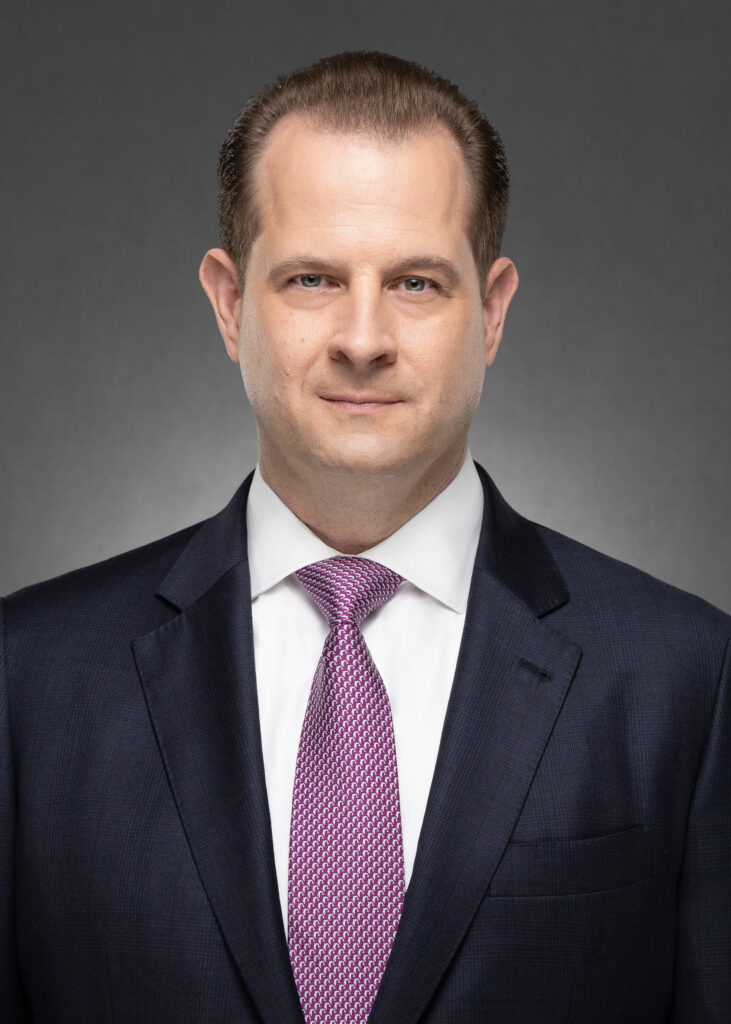 As Head of Public Policy and Municipal Strategy, Tom Kozlik advises HilltopSecurities’ businesses and clients on strategies related to U.S. public policy, public finance, and infrastructure. He publishes regular commentary that provides insight into current trends affecting these themes across a variety of sectors and geographic regions. Kozlik is frequently featured in print, digital, and broadcast news segments and regularly offers his expertise as a keynote speaker and panelist at industry conferences and events across the country. He can be reached at 214.859.9439 or tom.kozlik@hilltopsecurities.com.
The paper/commentary was prepared by HilltopSecurities (HTS). It is intended for informational purposes only and does not constitute legal or investment advice, nor is it an offer or a solicitation of an offer to buy or sell any investment or other specific product. Information provided in this paper was obtained from sources that are believed to be reliable; however, it is not guaranteed to be correct, complete, or current, and is not intended to imply or establish standards of care applicable to any attorney or advisor in any particular circumstances. The statements within constitute the views of HTS Public Finance as of the date of the document and may differ from the views of other divisions/departments of Hilltop Securities Inc. In addition, the views are subject to change without notice. This paper represents historical information only and is not an indication of future performance. This material has not been prepared in accordance with the guidelines or requirements to promote investment research, it is not a research report and is not intended as such. Sources available upon request.
Hilltop Securities Inc. is a registered broker-dealer, registered investment adviser and municipal advisor firm that does not provide tax or legal advice. HTS is a wholly owned subsidiary of Hilltop Holdings, Inc. (NYSE: HTH) located at 717 N. Harwood St., Suite 3400, Dallas, Texas 75201, (214) 859-1800, 833-4HILLTOP